

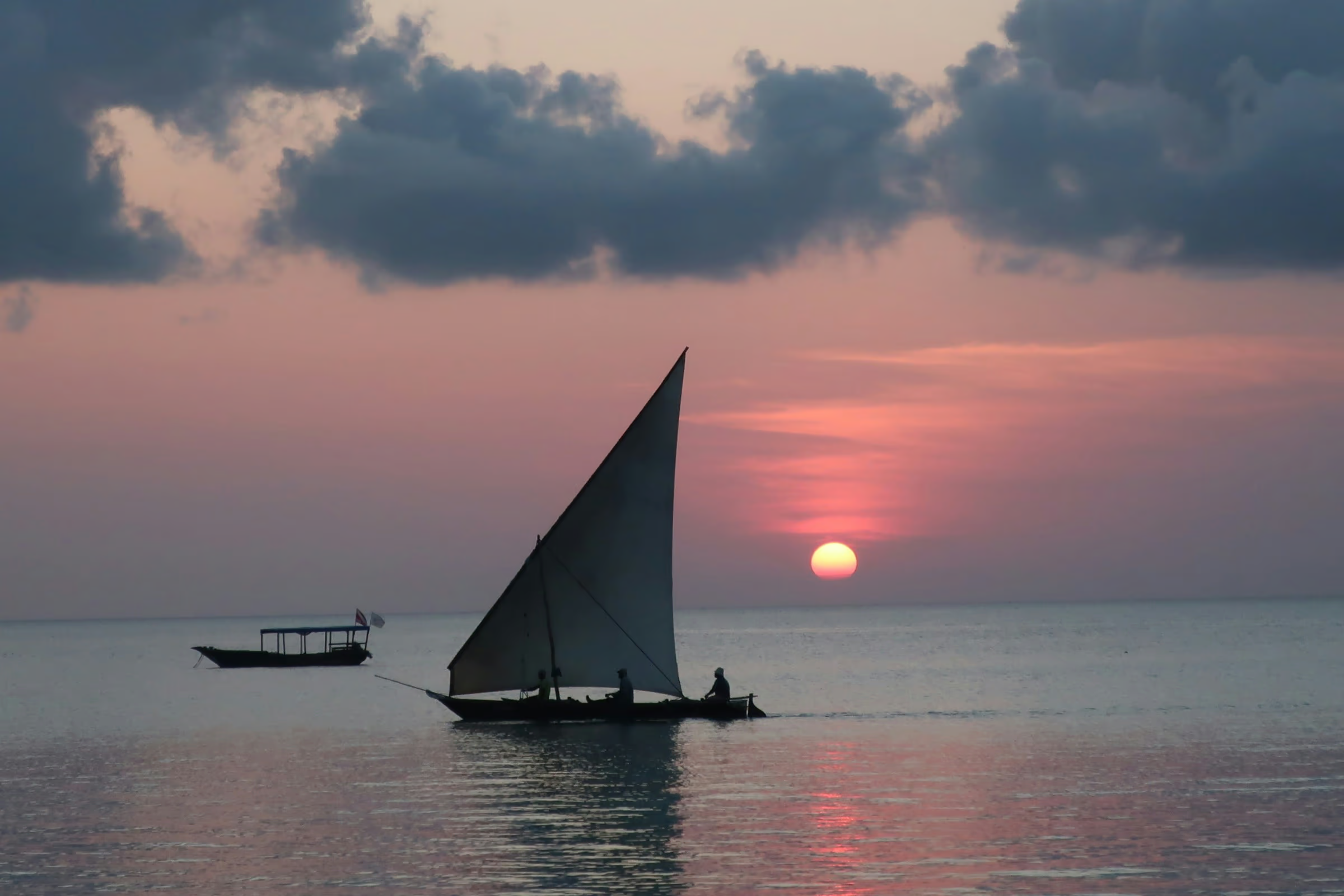
Zanzibar Dhows: Sailing Like in the 12th Century
When Wind Still Rules
The dhow has no engine. No GPS. No electronics. Just a wooden hull, a triangular sail and a captain who reads the sky like you read this text. These boats carried spices to Arabia, slaves to the Americas, dreams to the unknown. Today, they still carry goods, fishermen, and sometimes travelers seeking authenticity.
Anatomy of a Dhow
A traditional dhow measures between 10 and 30 meters. Its hull is built from mango or teak wood, assembled without metal nails - only with wooden pegs and coconut fiber. This 2000-year-old technique makes the boat flexible, capable of absorbing waves without breaking.
The triangular sail (lateen sail) is the dhow's signature. It allows sailing against the wind, a revolutionary innovation in the Middle Ages. Arab sailors dominated the Indian Ocean thanks to this sail.
The rudder is a simple wooden plank, controlled by hand. No wheel, no mechanism. The captain feels the boat through his hands, adjusts direction to the millimeter. It's a constant dialogue between man and sea.
Wind Routes: The Monsoon Dictates Everything
Dhows don't sail year-round. They follow the monsoon, that seasonal wind that reverses direction twice a year.
Kaskazi (December-March): northeast wind. Dhows leave Zanzibar southward (Mozambique, Madagascar) and westward (African continent). It's the season of great crossings.
Kusi (April-October): southwest wind. Dhows sail northward (Oman, India). Historically, it's during Kusi that Arab merchants came to buy spices and ivory.
Between the two monsoons, there are periods of dead calm. Dhows stay in port. Captains repair sails, caulk hulls, wait for the wind to return. You don't force nature. You adapt.
Captain Ali: 40 Years Without Engine
Ali Mzee is 62 years old. He's been sailing since age 14, like his father, grandfather, great-grandfather. His dhow, the "Mwana wa Baharia" (Son of the Sea), is 35 years old. No engine, no radio, no satellite phone.
"GPS tells you where you are. Stars tell you who you are", he says in Swahili. Ali navigates by dead reckoning: he observes water color (which changes with depth), wave direction, sun position by day and stars by night. He feels the wind on his skin and knows if it will turn.
His last voyage: Zanzibar-Mombasa (Kenya), 450 km, 4 days of navigation. Cargo: 3 tons of cloves, 500 kg of dried coconuts, 12 passengers. No insurance, no written contract. Just trust and reputation.
The Dhow Experience: What to Know
Sailing on a dhow isn't a luxury cruise. It's a raw, authentic, sometimes uncomfortable experience.
What to expect: - No toilets (you go in the water) - No cabin (you sleep on deck, under the stars) - No fixed schedule (you arrive when the wind decides) - Simple food (rice, grilled fish, chapati)
What you'll experience: - Absolute silence (just the sound of water and wind) - The sensation of floating outside time - Connection with a millennial tradition - Unforgettable sunsets - Pride in having sailed like the ancients
Dhows are more than boats. They're floating libraries, guardians of ancestral knowledge. Each captain is a living book. In a world obsessed with speed and efficiency, the dhow reminds us there's another way to travel: slowly, humbly, in harmony with the elements. Boarding a dhow means accepting to let go. And that's perhaps the most beautiful lesson Zanzibar can offer us.